

.png)
_edited.png)
WSIB Hearing Loss Claims in Ontario: What's Covered and Do You Qualify?
- Lisa Noble-Smith

- Apr 29
- 2 min read
Think your hearing loss may be work-related? Learn what WSIB covers in Ontario and how Caradoc Hearing makes the process simple—from testing to paperwork.
If you’ve spent years working around loud equipment, tools, or machinery, hearing loss can happen gradually—and often without you realizing it at first.
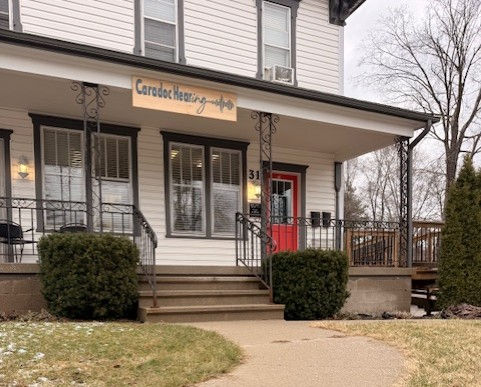
The challenge isn’t just recognizing it. It’s knowing what to do next.
For many people, navigating a Workplace Safety and Insurance Board (WSIB) claim can feel complicated and time-consuming. Between forms, approvals, and documentation, it’s easy to put it off.
At Caradoc Hearing, we help simplify that process.
How Do You Know If Hearing Loss Is Work-Related?
Noise-induced hearing loss leaves recognizable patterns that can be identified during a professional hearing assessment.

Common signs include:
Difficulty hearing high-frequency sounds
Trouble understanding speech in noisy environments
Gradual decline over time
According to the Canadian Centre for Occupational Health and Safety, long-term exposure to workplace noise above 85 dB can lead to permanent hearing damage.
At your appointment, we can identify whether your hearing loss aligns with these patterns and determine if a WSIB claim may apply.
What Does WSIB Cover for Hearing Loss?
If your hearing loss is approved as work-related, WSIB may cover:
Hearing tests and assessments
Hearing aids and devices
Ongoing care and support
The process, however, requires proper documentation and medical support.
We Help Handle the Paperwork
This is where many people feel overwhelmed.

At Caradoc Hearing, we:
Complete the required WSIB forms with you
Submit documentation on your behalf
Help guide the process from start to finish
You don’t have to navigate it alone—we’ve done this many times before.
What If You Don’t Qualify for WSIB?
There are still options available.
In Ontario, programs like the Assistive Devices Program (ADP) may provide funding—typically up to $1,000 per hearing aid.
You may also have:
Extended health benefits
Secondary insurance (spouse plans)
We help you understand all available options, so you’re not left guessing.
Protecting Your Hearing Going Forward
If your hearing loss is work-related, protecting what remains is critical.
We offer custom hearing protection designed for:
industrial environments
machinery exposure
long-term hearing preservation
Learn more about our hearing protection services.
Ongoing Support Through Our CARE Program
Hearing care doesn’t stop after your first visit.
Our CARE Program provides:
ongoing adjustments
follow-up appointments
continued support as your needs evolve
Learn more about our approach.
Start with a Simple First Step
If you think your hearing loss may be work-related, the best place to start is with a hearing test.
We’ll help you understand what’s happening—and guide you through your options from there.

Comments