.png)


_edited.png)
Hear Today. Hear Tomorrow.: Everything You Need to Know About Hearing Protection.

You rely on your hearing every day—for conversations, connections, and the moments that matter. But many everyday sounds can quietly cause damage over time. Understanding the risks is the first step to protecting it
We don’t often think about how loud everyday sounds really are—but over time, those sounds can have a lasting impact on your hearing.
From lawnmowers to concerts, noise exposure adds up. And once hearing damage occurs, it’s permanent.
To help put things into perspective, we’ve created a simple guide to common sound levels and what they mean for your hearing.
How Loud Is Too Loud?
We don’t often think about how loud everyday sounds really are—but over time, those sounds can have a lasting impact on your hearing.
From lawnmowers to concerts, noise exposure adds up. And once hearing damage occurs, it’s permanent.
To help put things into perspective, we’ve created a simple guide to common sound levels and what they mean for your hearing.

Undetected or Undecided?
Hearing loss is more common than most people realize—and often goes unaddressed.
1 in 5 Canadian adults has measurable hearing loss (Statistics Canada)
By age 60, that increases to 1 in 3
Only about 5% of people report hearing loss, while nearly 19% actually have it
On average, people wait 7 to 10 years before seeking help
According to the World Health Organization, many people delay addressing hearing loss due to stigma, uncertainty, or simply not recognizing the signs.
The result? Too many people quietly miss out on conversations before taking action.
85 dB – The Starting Point of Risk

Sounds at or above 85 decibels can begin to damage your hearing over time, especially with repeated exposure.
Common examples include:
heavy traffic
busy workplaces
According to Health Canada, long-term exposure at this level increases the risk of permanent hearing damage.
The key factor isn’t just volume—it’s duration.
90 dB – Common Everyday Exposure

Sounds like lawnmowers and power tools typically operate around 90 decibels—loud enough to cause damage with prolonged use.
Even short, repeated exposure without protection can add up over time.
Wearing hearing protection—even for quick tasks—can make a meaningful difference.
100 dB – Short Exposure, Higher Risk

At 100 decibels, hearing damage can begin in as little as 15 minutes.
Examples include:
concerts
sporting events
loud equipment
The Centers for Disease Control and Prevention notes that the louder the sound, the less time it takes to cause harm.
It Adds Up Faster Than You Think
The challenge isn’t just understanding the numbers—it’s recognizing how often we’re exposed to them.
Most people don’t think twice about:
mowing the lawn
attending events
working in noisy environments
But over time, it adds up.
Hearing loss doesn’t happen all at once—it builds gradually until it becomes noticeable.
The good news?
Noise-related hearing loss is permanent—but it’s also largely preventable.
Protecting Your Hearing Starts Now
Custom hearing protection can significantly reduce your risk—often lowering noise exposure by 15–30 decibels.
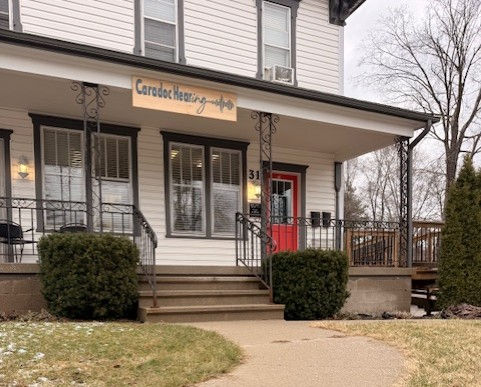
At Caradoc Hearing, we offer custom solutions designed for:
work environments
music and events
sleep and noise sensitivity
everyday protection
Protecting your hearing today helps preserve it for tomorrow. Explore our hearing protection options.
Not Sure Where You Stand?
If you’re unsure how your hearing may be affected, a simple hearing test can provide clarity.
It’s a small step that can make a big difference.


Comments